
While the development of talking humanoids may be years away, industrial robots are already helping to increase efficiency and productivity in many industries 1959…
Selected by Galigio via Computer Borders

Selected by Galigio via Computer Borders

Google Inc. today rolled new features for its cloud platform that address two of the most important technology trends in the enterprise: software containers and artificial intelligence. Just one of the enhancements focuses on AI, but it’s arguably among the most significant in the bunch.
Companies that use the Google Cloud ML Engine to build machine learning models can now harness the search giant’s internally designed Tensor Processing Units in their projects.
A TPU is made up of four application-specific integrated circuits specifically tuned for running AI software. The chip series, which powers several of Google’s consumer services, became available via its cloud platform in February.
from Pocket https://ift.tt/2rZjXep
Selected by Galigio via Computer Borders
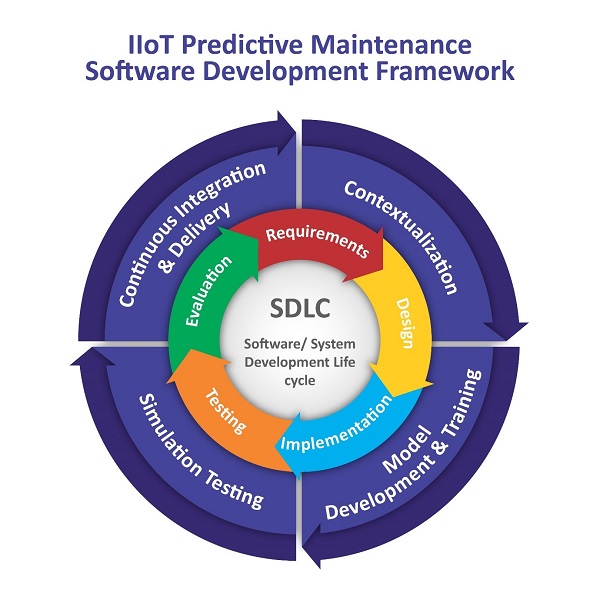
The marketing pitch is deceptively simple: As industrial plants struggle with the dearth of qualified big data experts to develop AI predictive maintenance, companies such as Google and Amazon claim that they can fill the void.

Blockchain and Artificial Intelligence are two of the hottest technology trends right now. Even though the two technologies have highly different developing parties and applications, researchers have been discussing and exploring their combination, and they have been found to go extremely well together...
from Pocket https://goo.gl/wEG4B7
Selected by Galigio via Computer Borders
Something for the Weekend, Sir? Car horns symphonise accompanied by a chorus of yelling cyclists as I shimmy on foot through oncoming traffic….
…Your bot looks cute but it’s easy to crack…
Selected by Galigio via Computer Borders

Google today announced the alpha launch of AutoML Vision, a new service that helps developers — including those with no machine learning (ML) expertise — build custom image recognition models.
The basic idea here, Google says, is to allow virtually anybody to bring their images, upload them (and import their tags or create them in the app) and then have Google’s systems automatically create a customer machine learning model for them.
from https://is.gd/MxkPfH
Selected by Galigio via Computer Borders
We’ve spent so long wringing our hands and worrying about artificial and virtual intelligence that we forgot to roll out the welcome mat when they finally arrived.
The future is here — and it’s equal parts exciting and terrifying. Now that our world is populated with computer programs that can teach themselves new tricks, how will things change? What’s still worth worrying about?
from https://is.gd/cVoWsf
Selected by Galigio via Computer Borders
At its core, Amazon’s goal is to remove as much friction as possible from a customer finding what they want, ordering it, and having it land on their doorstep. Its ambitions started with books, but have since extended to just about every other category, including clothes.
MIT Technology Review reports that a team at the e-commerce company, working at a San Francisco research center, has devised an algorithm that analyzes images to learn about specific styles of clothing. It then creates similar new items from scratch.
from https://is.gd/8L1w9m
Selected by Galigio via Computer Borders

Data scientist Hillary Mason (previously) talks through her astoundingly useful collection of small shell scripts that automate all the choresome parts of her daily communications: processes that remind people when they owe her an email; that remind her when she accidentally drops her end of an exchange…
from https://is.gd/DqZ4Ig
Selected by Galigio via Computer Borders
Google handed a new set of intelligent object detection capabilities over to the open source community as part of a continued development of its TensorFlow framework.
from https://is.gd/4EhIoC
Selected by Galigio via Computer Borders
 Computer Borders