Artificial intelligence is the next big thing’ – The Hindu

Source: thehindu.com


“…Cambridge Analytica, has been using Facebook as a tool to build psychological profiles that represent some 230 million adult Americans…
…No data point is very informative on its own, but profiling voters, says Cambridge Analytica, is like baking a cake. “It’s the sum of the ingredients,” its chief executive officer, Alexander Nix, told NBC News…
…It didn’t have to build everything from scratch. Mark Zuckerberg and others had already built the infrastructure the campaign needed to reach voters directly…”

Credit: danielforstyth.me
By definition, the forecast of the election results is something extremely difficult. A reliable forecast does not simply consider opinion polls but it should be able to also consider the impact of historical, social and economical variables combined with various factors such as the “possible behavior” or “psychological reactions” of voters.
There is always the real risk of not considering or underestimate some essential variables that will affect the decisions of voters just on the election day.
The graphs below are based on data from sites commonly considered as reliable and trustworthy but, in no case these charts can be regarded as scientific or reliable and are merely the result of a data processing described in a post published yesterday via Medium.
As empirically described by the Technical University of Munich through the paper “The mere number of tweets reflects voter preferences and comes close to traditional election polls”, the below analysis assumes the existence of a direct relationship between the number of tweets generated during an electoral contest by a candidate and the final election results.
To mitigate the supposed direct relationship between the number of tweets and the final electoral results I considered other data variables as described in the post published yesterday via Medium.


“… Christian Martinez, Facebook’s head of multicultural, posted a response to the article.
“A nonprofit that’s hosting a career fair for the Hispanic community can use Facebook ads to reach people who have an interest in that community. And a merchant selling hair-care products that are designed for black women can reach people who are most likely to want its products,” he wrote.
“That merchant also may want to exclude other ethnicities for whom their hair care products are not relevant—this is a process known in the ad industry as “exclusion targeting.”…”
————-
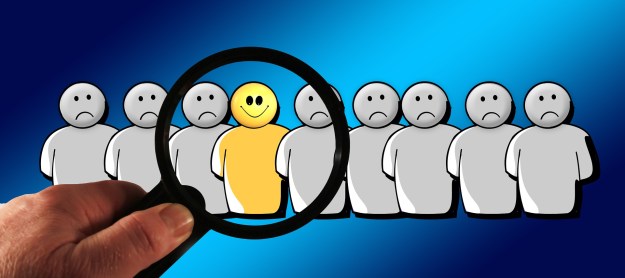
In my personal opinion, this could mean:
but potentially also…..

That’s a dilemma!

“…Just as “the cloud” was becoming the answer to every “How does it work?” question, smartphones have started clawing back their independence, performing on their own tasks that used to require a tether to a server farm. The result is a more natural AI experience, without the annoying or creepy lag of an internet connection to a data center…
…AI will also drive convenience features. You might see virtual assistants that use the phone’s camera to recognize where you are, such as a specific street or the inside of a restaurant, and bring up relevant apps, says Rizzoli. And for once, such hyper-conveniences may not have the creep factor. If future AI doesn’t need the cloud, then the cloud doesn’t need your personal data…
…As artificial intelligence continues expanding across the tech world, it seems destined to grow on phones, too. Expectations are rising that gadgets will simply know what we want and what we mean…”

Courtesy of Global News and Tech in Asia

Courtesy of Global News and Tech in Asia


Courtesy of CURBED.COM



 Computer Borders