Category Archives: cyberlaws

Defend Trade Secrets Act. It’s Coming: What You Need to Know — The National Law Forum

The Defend Trade Secrets Act (DTSA) is headed to President Barack Obama for his signature, and there is little doubt that President Obama will sign it into law. Below is a summary of what you need to know about this soon-to-be law, including what you should be talking to your employment law counsel about in […]

via Defend Trade Secrets Act. It’s Coming: What You Need to Know — The National Law Forum

Big Data & Cyberlaw- A Basic Primer — Cyber law books by Pavan Duggal

Big Data & Cyberlaw- A Basic Primer Big data is a term that we are increasingly hearing these days. In fact, big data has already started impacting the mainstream operations of our daily lives, without us even realising the same. Companies and legal entities are increasingly relying upon big data, not just for the purposes […]

via Big Data & Cyberlaw- A Basic Primer — Cyber law books by Pavan Duggal

3 steps to install DNScrypt to improve your privacy – Ubuntu version

Also if you use OpenDNS to improve your standard of privacy, you are not protected by “last mile” dangers but you can boost your security installing DNScrypt on your digital device. DNScrypt “works by encrypting all DNS traffic between the user and OpenDNS, preventing any spying, spoofing or man-in-the-middle attacks”.

DNScrypt “is a protocol that authenticates communications between a DNS client and a DNS resolver” and it “is not a replacement for a VPN, as it only authenticates DNS traffic, and doesn’t prevent “DNS leaks”, or third-party DNS resolvers from logging your activity”.

For this reason you have to be conscious that DNScrpt is just a -very good- improvement of your privacy but not the definitive solution to all your privacy concerns.

DNScrypt is so versatile that you can install it on every kind of device you prefer. In fact it is possible to download DNScrypt for servers, IOS, OSX, Android, Windows and Linux computers (DNScrypt-proxy version). Obviously the installation and setup will vary a little depending the OS you installed on your device.

Concept-Skyscraper-Feeds-on-Air-Pollution-Uses-It-to-Grow-433607-2

Image from softpedia.com

Here we are talking about DNScrypt installation on Ubuntu.

For this purpose I suggest to use the Terminal that allows you to install DNScrypt i just 3 steps:

sudo add-apt-repository ppa:anton+/dnscrypt
sudo apt-get update
sudo apt-get install dnscrypt-proxy

Last but not least, you need to interface the Internet traffic of your computer through the DNScrypt-proxy. For this reason you have to Edit your Network Configuration and add the address 127.0.0.2 to the “DNS Servers” line as for the below screenshot:
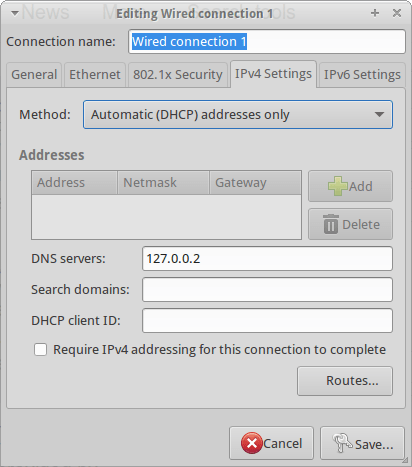
DNSCrypt

Now you can start DNScrypt just typing:

sudo dnscrypt-proxy -R opendns -a 127.0.0.2:53 -u okturtles

Where, in my specific case, okturtles is the name of the remote DNS resolver I decided to use. I chose that specific risolver from the list I found into into my computer after DNScrypt-proxy installation:

/usr/share/dnscrypt-proxy/dnscrypt-resolvers.csv

As usual in similar situations, you may want to spend another couple of minutes to configure your computer to start DNScrypt at the computer boot. Open the Session and Startup manager through the desktop Dash and Add this specific command to the Application Autostart menu:

sudo dnscrypt-proxy -R opendns -a 127.0.0.2:53 -u dnscrypt

Link
star-wars-logo

Image from opencastingcall2013.com

What Do Star Wars and Recent Data Breaches Teach Us About Cyber Ethics?

Could Privacy Law Limitations kill the Internet Dream?

Is Privacy a fundamental human right? Your personal answer to this question is the starting point to think about the current Internet legislation and to evaluate if the recent legal restrictions on civil rights could represent the “end of the Internet Dream.” A clear and motivated opinion about this issue is a strategic keypoint for all those people who, as me, operate everyday in one of the many Internet branches as consultants, lawyers, programmers, marketing experts, investors or, more often, as common users.

Dan Gillmor, via BACKCHANNEL, has recently underlined that a liberal legislation should not restrict end to end encryption, because it represents the best safeguards for tomorrow’s freedom. A standard use of fragile encryption, imposed by Law, will not only interfere with privacy, but will also heavily tamper with Internet global security.

o-INTERNET-PRIVACY-facebook

Image by quotesgram.com

On the other hand, Dan Patterson, via TECHREPUBLIC, has reported two different conversations with UN reporters who affirmed that strong encryption allows privacy and privacy is the corner stone of truth, especially for reporters, because it helps to “validate the veracity of information.”

Consequently, to preserve our privacy in our daily living it would be useful to:

  • Use Privilege VPN or  HTTPS connections when you surf Internet;
  • Use Encrypted Storage for your data, especially if you cannot avoid using cloud-based services;
  • Watch the Legislator: contact the MP/Politician who represents you and express your point of view, each time a restrictive Law proposal is under discussion.

As Citizens, the real challenge we have for the next months is represented by the influence we will be able to exercise on new Laws that should find a legal equilibrium between anti-terrorism surveillance and the need of protecting citizen’s personal information allowing the use of VPN/HTTPS connections and Encrypted Storage.

Link

Arresting Crime Before It Happens

Link

The End of the Internet Dream?

Link

paris_assemble_nationale-640x430French state of emergency allows website blocking, device search powers