Tag Archives: Linux

Video – Install Macbuntu on Ubuntu 11.04 by seaner992

AddThis

How to Make Your Ubuntu Desktop Look Like the One of Mac OS

If you are a fan of the design proposed by Apple for most of its operating systems, particularly Mac OS X, then there are a couple of things that you should take into consideration and some simple steps to follow. Therefore, you are advised to read the following information carefully in order to achieve the expected outcome in the shortest time.

There are two free pieces of software that can transform your Ubuntu desktop into one that looks identical to the one of Mac OS in no time. The Ubuntu version is called Macbuntu. First of all, you will need to install this program onto your local hard drive. Here is what you need to do for this step:

– If you are using Ubuntu 10.4 Lucid Lynx, you will need to open a new terminal and type the following lines into it:

$wget https://downloads.sourceforge.net/project/macbuntu/macbuntu-10.04/v2.2/Macbuntu-10.04.tar.gz -O /tmp/Macbuntu-10.04.tar.gz
$tar xzvf /tmp/Macbuntu-10.04.tar.gz -C /tmp
$cd /tmp/Macbuntu-10.04/
$./install.sh

– On the other hand, if Ubuntu 10.10 Maverik Meerkat or a similar version is installed in your system, you will need to use a different version of Macbuntu, which can be accessed by typing the following:

$wget https://downloads.sourceforge.net/project/macbuntu/macbuntu-10.10/v2.3/Macbuntu-10.10.tar.gz -O /tmp/Macbuntu-10.10.tar.gz
$tar xzvf /tmp/Macbuntu-10.10.tar.gz -C /tmp
$cd /tmp/Macbuntu-10.10/
$./install.sh

During the install process, you will be provided with the chance of choosing between different options. These are usually dependent on the different ways you wish your desktop to look like. Most of the choices will be based on your visual tastes, so make sure you choose according to them.

Finally, whenever you need to uninstall this special package for some reason you can follow the same procedure described above, with just an exception. Instead ./install.sh you will need to use the ./uninstall.sh command. AddThis

How To Install and Configure Conky by DarkJediHacker

AddThis

Install Conky system monitor for Linux and configure it in few basic steps

Conky is one of the most powerful and versatile system monitors for Linux desktops. It allows you to monitor and display all the information about your hardware, top processes, network, emails and more. At the moment more than 300 different feature has been built for Conky and searching on the web you always find the perfect feature already developed by someone.

– Installation on Ubuntu:

in Terminal run: sudo apt-get install conky

– Configuration:

In Terminal run: sudo nautilus

Go to File System: /etc/conky/conky.conf

Save a copy of the original conky.conf in another location and open the original file with Gedit Text Editor

First of all change: own_window yes to own_window no

Choose your preferred alignment (some samples below…):
alignment top_right
or
alignment middle_right
or
alignment bottom_right

Play with: update_interval 1.0
and change the interval value till you find the right ratio to obtain the best speed for you (in my case it was 0.80).

Add this line to eliminate any flickering:
double_buffer yes
but, on some computers, all the icon on your desktop will be hidden and you need to use (move) the mouse to discover them if you will not add this parameter: own_window_type normal

Add, as last line (or in other position if you prefer):
${color red} ${cpugraph} to have a clear graph about cpu (obviously you can choose the color you prefer)

For automatic start of Conky at startup, please follow the following instructions:
Run Startup Applications in System –> Preferences
Click on Add and save after updating the following instructions
Name: Conky
Command: /usr/bin/conky

Restart Ubuntu to check your new Conky “applet”

Link to Conky: http://conky.sourceforge.net/

For more info about Conky’s variables: http://conky.sourceforge.net/variables.html

Find online some pre-compiled Conky configuration files, searching, for example, on: http://gnome-look.org
AddThis

How to: Use Google Music for Android by CNET

AddThis

Google Music con Aplicación también para Linux

Desde hace unos meses Google ya ofrece el servicio Musica por streaming y de poder tener hasta 20.000 canciones almacenada en ” las nubes “; todavía este servicio no está disponible en España y Europa pero es igualmente posible conseguir una invitación.

Ante de todo hay que tener una cuenta de Gmail o crearse una. Luego dirigirse a la pagina de proxy.org para elegir un proxy de USA. Después de elegir el proxy hay que pegar la dirección que permite pedir la invitación a nombre de vuestra cuenta de Gmail y ya esperar que llegue la invitación por parte de Google, yo ya recibí la invitación y ya tengo mi Google Music activado.

Es un servicio muy interesante y funciona muy muy bien, aparte de los Artistas y las Canciones que nos Ofrece Google de forma gratuitas también podemos administrar nuestra música, la que tengamos en nuestro PC y subirla a nuestro Google Music gracias a una Aplicación especifica para Linux ( .deb, rpm, 32/64 bit ), así que ya no hay que instalar la versión para Windows y lanzarla con Wine. También está disponible una Aplicación para Android para que podamos escuchar en Streaming y administrar nuestra música sin tener que llenar la memoria de nuestro Smartphone.

Me parece un excelente servicio por parte de Google, funciona muy bien y sin coste alguno. Os dejo unos enlaces para que podáis pedir la invitación (yo tengo 8 disponibles, si alguien quiere inviar su correo yo puedo enviarle una invitación) y también otros para poder bajar la Aplicación para Android.

Proxy.org: http://proxy.org/

URL Invitación: http://music.google.com/music/usernotinvited.

Aplicación para Android: https://market.android.com/details?id=com.google.android.music

AddThis

Video – TeamViewer remote Desktop Connection by xComptoturialx

Bookmark this page!

TeamViewer: Control remoto para Linux y Android

Ante de nada, quiero disculparme con todos los seguidores de Galigio por la falta de Post en Castellano, espero poder volver a contribuir con mi granito de arena y compartir mis ideas. Bueno volviendo a lo nuestro, os quiero hablar del programa TeamViewer.
Hace tiempo estuve mirando para poder efectuar el aceso remoto entre mi PC y el PC de un amigo, ambos con Linux; desafortunadamente hay que reconocer que es posible pero no de una forma muy rápida y sencilla, el programa LogmeIn que era una de los disponible funcionaba solo con Windows y MAC también. Afortunadamente hace unos meses estuve investigando otra vez y pude averiguar que TeamViewer está disponible para Linux, Mac, Windows y también para Smartphones. La versión para Linux está disponible en diferentes paquetes: deb 32/64 bit, rpm 32/64 bits y también tar.gz; para Smartphone está disponible para Android, iPhone e iPad. Yo que uso Kubuntu he instalado la versión deb y también la he instalado en mi Smartphone Android.

Tengo que reconocer que funciona muy muy bien, desde mi teléfono puedo entrar en el escritorio de mi PC sin ningún problema y funciona muy rápido sin quedarse colgado. También he hecho una prueba entrando en el portátil de mi hermana mientra ella estaba en su casa y yo en la mía, todo muy bien, he podido efectuar una asistencia remota en su portátil e ayudarla con algún problemita que tenia. En fin, puede que no os cuente nada nuevo pero os aconsejo de probar esta aplicación porque seguro que siempre pude venir bien para diferentes usos. os dejo el enlace a su pagina Web. Bookmark this page!

How to Install Sopcast for free live TV in Ubuntu

Sopcast represents one of the most popular technologies for live TV streaming, being based on the famous p2p system. However, until recently, there was no version of this software for Ubuntu and Linux in general. But now every single user can enjoy live TV right on their desktop or laptop computer with this absolutely amazing program.

In order to install Sopcast on your machine, here is what you need to do:

1. Open a new terminal. This is a classic step and is used in most of the installation processes you will encounter in Ubuntu.

2. In order to add Sopcast to Synaptic (the package administrator software integrated into Ubuntu) you will need to type the following command:
sudo add-apt-repository ppa:jason-scheunemann/ppa

3. The next step is related to the update of the sources list. This can be done with the following command, which needs to be typed into the same terminal in order to achieve the right effects:
sudo apt-get update

4. Now you will need to run Synaptic in order to finalize the process. This is usually done through the System menu (System -> Administration -> Synaptic). Alternatively, you can use the following simple command:
sudo synaptic

5.  Look for the Sopcast package and install it. A very important step at this point is to not forget about all its dependencies. If you do not install everything, then Sopcast will not run correctly or not at all.

This is basically all you need to know if you want to install Sopcast on your machine. Whenever you need to run the player you can find it in the Application menu -> Multimedia -> Sopcast. You will surely enjoy the great variety of the channels available for every user through this system.

AddThis

How to Boot Ubuntu from USB

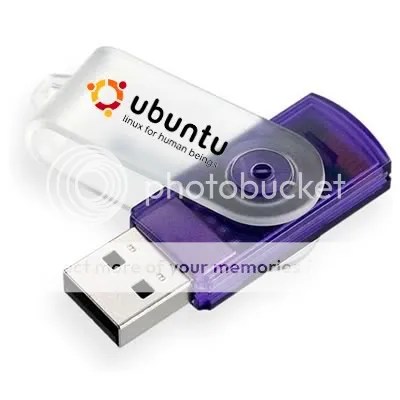
When it comes to the most recent generation of computers, there is an option to start an operating system right from a USB stick, without an actual installation process. This may be an option to use or test a different operating system without affecting in any way the one that is already installed.

Starting from version 8.10, Ubuntu can be installed on a USB stick in a more easy way by every single user, regardless of their knowledge in Linux. To perform the installation, the user must have a version of 8.10 or later on CD and a USB stick with a capacity of at least 700 MB free space available, but this can vary according to the version of Ubuntu that you want to use for this process.

To install Ubuntu on the USB stick, you can simply boot the Live CD mode of Ubuntu or alternatively, if already installed on your on your system, you can follow the following simple procedure to do this, which is described in some basic steps below.

First of all, you need to access the Ubuntu menu bar, via System> Administration, choose Create a USB startup disk.

At this point, you will be asked to specify the source disk image of Ubuntu. If you have the Ubuntu CD in optical drive, it should appear in the list and will be selected. Otherwise, click Other and specify the location of the image. The .iso format will do it, but other versions may work as well.

When completed, you can use the stick on any computer that can boot from such units. Just tell the computer’s BIOS to use this option and restart the respective machine. The same procedure can be applied for the any distribution of Linux, so this is a helpful tutorial for everyone. AddThis