
Category Archives: Linux & OpenSource

Android ROM’s (para Moviles y Tablet)

Hace varios meses por fin pude conseguir un Móvil con Android (un Samsung Galaxy S). Antes usaba un Nokia 5800 con Symbian y tengo que decir que la diferencia es enorme. En lo que se refiere el Hardware el SGS es mucho mejor, pero lo que mas me ha gustado es su SO Android.

Actualmente la ultima versión disponible para Moviles es Gingerbread 2.3.4, pero eso depende mucho también del Terminal que cada uno tenga y mucho depende también de que Operadora estés usando. Las actualizaciones son muy desfragmentada y controlada por las propias Operadoras, limitando así el enorme potencial de cada Terminal. Afortunadamente es posible meter mano a nuestros Moviles y Actualizar o instalar diferentes ROM “Cocinadas” con la ultimas actualizaciones disponibles; yo al principio estaba con un poco de miedo al cargarme completamente el Movil y dejarlo como un pisapapeles, pero hay que reconocer que después de buscar e investigar mucho en la red, he encontrado toda la información y las herramientas disponibles para poder personalizar el Movil y tenerlo siempre con las ultimas actualizaciones disponibles. Actualmente en mi SGS tengo instalada la Darky’s ROM, para mi es una de las mejores pero hay muchas mas como la MIUI, Cyanogen, Criskelo…

Para todos aquello que todavía se encuentran con la ROM oficial de las Operadoras os aconsejo que sigan los enlaces que añado a este post, allí es posible ver tutoriales y explicaciones de como poder cambiar ROM, todas la informacion disponible para cada marca (Moviles y Tablet) y naturalmente la posibilidad de bajarse las mejores ROM e instalarlas en vuetros Moviles. Espero que os animéis.

Darky’s : http://www.darkyrom.com/community/index.php

SamFirmware : http://www.samfirmware.com/apps/blog/

HTCMania: http://www.htcmania.com/foro.php

xda-developers: http://forum.xda-developers.com/

AddThis

Video – TeamViewer remote Desktop Connection by xComptoturialx

Bookmark this page!

TeamViewer: Control remoto para Linux y Android

Ante de nada, quiero disculparme con todos los seguidores de Galigio por la falta de Post en Castellano, espero poder volver a contribuir con mi granito de arena y compartir mis ideas. Bueno volviendo a lo nuestro, os quiero hablar del programa TeamViewer.

Hace tiempo estuve mirando para poder efectuar el aceso remoto entre mi PC y el PC de un amigo, ambos con Linux; desafortunadamente hay que reconocer que es posible pero no de una forma muy rápida y sencilla, el programa LogmeIn que era una de los disponible funcionaba solo con Windows y MAC también. Afortunadamente hace unos meses estuve investigando otra vez y pude averiguar que TeamViewer está disponible para Linux, Mac, Windows y también para Smartphones. La versión para Linux está disponible en diferentes paquetes: deb 32/64 bit, rpm 32/64 bits y también tar.gz; para Smartphone está disponible para Android, iPhone e iPad. Yo que uso Kubuntu he instalado la versión deb y también la he instalado en mi Smartphone Android.

Tengo que reconocer que funciona muy muy bien, desde mi teléfono puedo entrar en el escritorio de mi PC sin ningún problema y funciona muy rápido sin quedarse colgado. También he hecho una prueba entrando en el portátil de mi hermana mientra ella estaba en su casa y yo en la mía, todo muy bien, he podido efectuar una asistencia remota en su portátil e ayudarla con algún problemita que tenia. En fin, puede que no os cuente nada nuevo pero os aconsejo de probar esta aplicación porque seguro que siempre pude venir bien para diferentes usos. os dejo el enlace a su pagina Web. Bookmark this page!

How to install “old” add-ons on Firefox 5. The easy way!

Firefox add-onsI usually update my Firefox as soon as possible but often, especially after installing the new version 5 on a Ubuntu 11.04 platform, I had to lose many add-ons that I previously selected and used daily. To avoid this problem I found some tips on the web and I tested all of them with different results.

Solution 1
– download the .xpi file from its official Firefox add-on webpage using the right mouse button (Save Link As) on

– unzip the .xpi file with Archive Manager and open install.rdf using a Text Editor;

– find this line: em:maxVersion and change the value from e.g. 4.0.* to 5.0.*;

– click on   icon in the Firefox Add-ons Manager, select “Install Add-on From File…” and follow the visual instructions.
Unfortunately this solution didn’t work always during my tests

Solution 2
– open a new Tab on Firefox and type: about:config;

– agree to the warning message;

– search all the lines with the string extensions.checkCompatibility and set the values to false

– restart Firefox and enable or install your “old” add-ons.

Solution 3 – The easy one!
– open a new Tab on Firefox and click on Tools –> Add-ons;

– search for the Add-on Compatibility Reporter and install it;

– restart Firefox and you will be able to install all the old add-ons.

Sometimes you will discover that installing “old” add-ons doesn’t mean that they really run on Firefox 5 but, in my experience, more than the 70% of them will be good for the new version. Have fun!! AddThis

Technorati Tags: , , , , ,

How to Install Sopcast for free live TV in Ubuntu

Sopcast represents one of the most popular technologies for live TV streaming, being based on the famous p2p system. However, until recently, there was no version of this software for Ubuntu and Linux in general. But now every single user can enjoy live TV right on their desktop or laptop computer with this absolutely amazing program.

In order to install Sopcast on your machine, here is what you need to do:

1. Open a new terminal. This is a classic step and is used in most of the installation processes you will encounter in Ubuntu.

2. In order to add Sopcast to Synaptic (the package administrator software integrated into Ubuntu) you will need to type the following command:
sudo add-apt-repository ppa:jason-scheunemann/ppa

3. The next step is related to the update of the sources list. This can be done with the following command, which needs to be typed into the same terminal in order to achieve the right effects:
sudo apt-get update

4. Now you will need to run Synaptic in order to finalize the process. This is usually done through the System menu (System -> Administration -> Synaptic). Alternatively, you can use the following simple command:
sudo synaptic

5.  Look for the Sopcast package and install it. A very important step at this point is to not forget about all its dependencies. If you do not install everything, then Sopcast will not run correctly or not at all.

This is basically all you need to know if you want to install Sopcast on your machine. Whenever you need to run the player you can find it in the Application menu -> Multimedia -> Sopcast. You will surely enjoy the great variety of the channels available for every user through this system.

AddThis

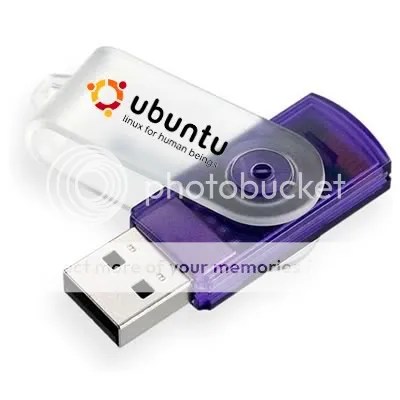
How to Boot Ubuntu from USB

When it comes to the most recent generation of computers, there is an option to start an operating system right from a USB stick, without an actual installation process. This may be an option to use or test a different operating system without affecting in any way the one that is already installed.

Starting from version 8.10, Ubuntu can be installed on a USB stick in a more easy way by every single user, regardless of their knowledge in Linux. To perform the installation, the user must have a version of 8.10 or later on CD and a USB stick with a capacity of at least 700 MB free space available, but this can vary according to the version of Ubuntu that you want to use for this process.

To install Ubuntu on the USB stick, you can simply boot the Live CD mode of Ubuntu or alternatively, if already installed on your on your system, you can follow the following simple procedure to do this, which is described in some basic steps below.

First of all, you need to access the Ubuntu menu bar, via System> Administration, choose Create a USB startup disk.

At this point, you will be asked to specify the source disk image of Ubuntu. If you have the Ubuntu CD in optical drive, it should appear in the list and will be selected. Otherwise, click Other and specify the location of the image. The .iso format will do it, but other versions may work as well.

When completed, you can use the stick on any computer that can boot from such units. Just tell the computer’s BIOS to use this option and restart the respective machine. The same procedure can be applied for the any distribution of Linux, so this is a helpful tutorial for everyone. AddThis

CD Burning Applications for Ubuntu

There are not many applications for recording optical media under Linux. On the other hand, applications for Windows that allows a user to write a CD or DVD are numerous, but the most important difference is that those available on Linux are free and / or open source, with some exceptions. But all have basically the same purpose – to write or copy a disk.

In the world of Linux, the most common applications for burning optical media are usually pre-installed with the operating system chosen by the user. If not, they can be downloaded and installed easily on almost any platform.

Here are some of the most common such programs for Ubuntu:

Applications for Gnome / GTK

Brasero

Brasero is one of the most popular tools in the world of burning CDs. It usually comes pre-installed in most distributions that use Gnome. Brasero provides the user with a very friendly and simple interface while keeping all the important features needed by a user. Brasero is an application that requires minimal resources, providing maximum functionality, all integrated in one intuitive interface.

GnomeBaker

GnomeBaker is another GTK application with the same functionality as Brasero, but with a different interface. GnomeBaker gives the user an interface similar to Nero and K3B. The difference in use depends on the visual tastes.

X-CD-Roast

X-CD-Roast is an application to burn discs with its basic functions, but comes with a relatively primitive interface. Many users might find its interface as hard to use.

KDE Applications

K3B

K3B is probably one of the most popular programs available in the Linux world. It has many advanced features and options that would satisfy most users of such a program. It is available for both KDE and Gnome. Generally, K3B is regarded as the Nero of Linux.

AddThis Flattr this

Including a Ubuntu Machine into a Windows Domain

One of the great problems of interoperability between Linux and Windows has been the impossibility of Linux systems for joining a Microsoft Windows network. Subsequently, several standards to achieve this were developed over the years (see Samba), but they were far from offering normal user the chance to achieve this easily.
The infrastructure of many companies around the world, of all sizes, also relies on the use of a Windows domain. In all companies, one priority always stands out. That is to reduce information costs and expenses. Because of this, many of them have opted for the use of computers with Linux operating systems. But in many cases their integration into Active Directory environments was a problem.
Recently, a new tool was created to facilitate the full integration of a Linux system in an AD environment. And as far as today, it seems very promising. Thanks to likewise-Open5 (http://www.likewiseopen.org/), the difficulty of integration is almost null.

The following lines will illustrate the inclusion of Ubuntu in a Windows domain via likewise-Open5.

Installation

Likewise-Open5 Installation process is very simple. It can be done both through the graphical environment and command line. We will use the second variant. Therefore, a new terminal window must be open, in which you specify the following command:

sudo apt-get install likewise-open5

This command should resolve all the dependencies necessary to prepare the machine to be integrated in the Windows domain.

Adding a new machine

To actually add the machine, specify the following command in the terminal window:

sudo domainjoin-cli join domain used

Where DOMAIN is the area used for integrating the machine, and USER is the username that has the corresponding rights. You will be asked for your user password, and once successfully logged in, you are officially added the desired machine. AddThis Flattr this

How to open PDF files (and other formats) through Mozplugger on Ubuntu

This article comes as a useful help for all Linux (Ubuntu) users, which will be presented with a new way of opening PDF files in the browsers compatible with this operating system. First of all, most of you probably know that Google Chrome is capable of doing this by default, without the user being required to make a particular setting.

However, Firefox does not currently have this built in feature, so it needs some help (usually in the form of a plugin) in order to open the PDF files you download or see online. In addition to the official plugin from Adobe (which contains numerous bugs and can sometimes be really annoying because if its way of loading PDFs), there is the option known under the name of Mozplugger. This is actually a plugin that allows the integration of different applications with the Firefox browser so that it can open some files not recognized automatically by default. If you want to install Mozplugger, the following simple steps are required and can be done by anyone.

After installing Mozzplugger, the following text muse be written in mozpluggerrc:

application / pdf: pdf: PDF file
application / x-pdf: pdf: PDF file
text / pdf: pdf: PDF file
text / x-pdf: pdf: PDF file
application / x-postscript: ps: PostScript file
application / postscript: ps: PostScript file
repeat noisy swallow (Evince) fill: Evince “$ file”

After making these changes, a restart is totally recommended. If you do not restart your browser right after that, changes might not take the desired effects. You will surely enjoy everything this great plugin has to offer. Not only will you be able to read PDFs directly in your browser, but there will also be some extra formats that you never thought they could be read directly from Firefox. AddThis